Category: Uncategorized

  • Where My Stories Begin

    I rarely begin with a complete plot.

    More often, a story starts with something much smaller—a place, a memory, an image, a question, or a moment that refuses to go away.

    Sometimes It Starts With a Place

    A location can carry an entire emotional atmosphere before a single character appears.

    A weathered pier. A quiet road. An old house. A lake at dusk.

    Certain places immediately suggest history. They make you wonder who has been there before, what happened there, and what might still be unfinished.

    Sometimes It Starts With a Question

    Other stories begin with a simple “What if?”

    What if you could see something no one else could see?

    What if you were given a chance to change one moment from your past?

    What if the person you thought was gone from your life suddenly returned?

    Once a question like that takes hold, the story begins to grow around it.

    Characters Come Next

    Plot matters, but I become much more interested once I know who is going to be forced to live through it.

    I want to know what the characters want, what they fear, what they regret, and what they are trying very hard not to admit.

    That is usually where the real story begins.

    The Emotional Core

    Even when a novel includes mystery, suspense, supernatural elements, or time travel, I keep coming back to the emotional choices underneath it all.

    Who do we become when we are given another chance?

    What are we willing to risk?

    What happens when the past refuses to stay where we left it?

    From One Small Idea

    A novel may eventually become hundreds of pages, dozens of scenes, and a cast of characters.

    But for me, it usually begins with one small thing that feels worth following.

    Then I keep asking questions until a story appears.

    In Closing

    That may be the part of writing I enjoy most.

    Not knowing exactly where the idea will lead—but knowing there is something there worth discovering.
  • Why I Revisited My Earlier Books

    Sometimes finishing a book doesn’t mean you’re finished with the story.

    Years can pass, perspectives change, writing improves—and suddenly you can see possibilities in an earlier book that you simply could not see when you first wrote it.

    Looking Back With Different Eyes

    When I returned to some of my earlier novels, I did not want to simply correct a few sentences and put them back out into the world.

    I wanted to ask a harder question:

    If I were writing this story today, what would I do differently?

    That meant looking at character motivations, pacing, emotional depth, dialogue, continuity, and whether each scene truly earned its place in the story.

    The Story Was Still There

    What surprised me was how much I still believed in the heart of those books.

    The original ideas were not the problem. In many cases, the characters and central conflicts still mattered to me.

    What had changed was my ability to tell those stories more clearly and more honestly.

    Revising Is Not the Same as Starting Over

    Reworking an older novel can be a strange experience.

    You recognize the story, but you also recognize all the places where you once took shortcuts, moved too quickly, or failed to give a character enough room to become fully human.

    The goal is not to erase the earlier version. It is to take what was always strongest about it and finally give it the treatment it deserved.

    Why It Matters to Me

    I want every book with my name on it to be something I am proud to put in a reader’s hands.

    That does not mean every story has to be perfect. No book ever is.

    But it should feel complete, intentional, and emotionally true.

    Revisiting earlier work has given me the chance to do that.

    In Closing

    Sometimes the best thing an author can do is move on to the next story.

    And sometimes the right choice is to go back, look again, and finish the job properly.

  • The Inspiration Behind The Pier

    The Inspiration Behind The Pier

    Some stories begin with a plot. Others begin with a place. The Pier began with a place that stayed with me for years.

    A Place That Stayed With Me

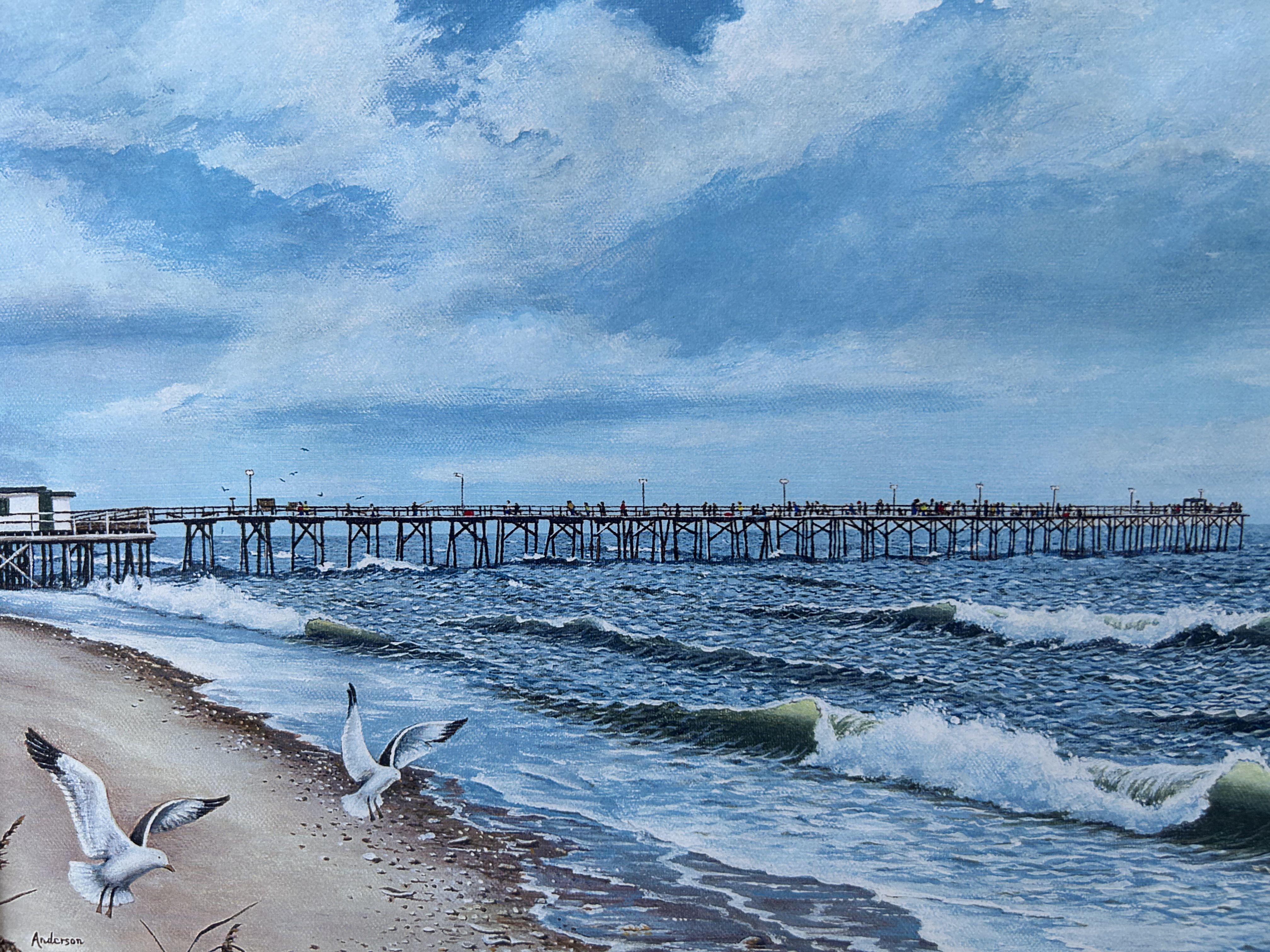
    In 1996, I spent time in the Wilmington, Carolina Beach, and Kure Beach area of North Carolina. One of the places that stayed with me most was Kure Beach Pier.

    There was something about that pier—the way it reached out over the Atlantic, the people who gathered there, and the feeling that it had been part of countless lives long before I ever arrived.

    Years later, when I began developing The Pier, that memory became much more than a setting. The pier became the emotional center of the story.

    More Than a Setting

    In the novel, the pier represents memory, home, loss, and the things people sometimes leave behind without realizing how much they still matter.

    That became one of the ideas I wanted to explore throughout the book: places can carry pieces of our lives. Sometimes returning to them brings back memories we thought were gone. Sometimes they force us to confront choices we never really finished making.

    Where Fiction Takes Over

    The Pier is fiction. The characters, relationships, and events in the novel are imagined.

    But the feeling behind the setting is very real.

    I wanted the town and pier to feel lived-in rather than simply described—to feel like a place where generations had worked, loved, argued, grieved, celebrated, and eventually passed their stories to the people who came after them.

    Why The Pier Matters

    By the time the story was finished, the pier had become almost a character itself.

    It connects the past and present. It brings people together. It holds memories that the characters would sometimes rather forget.

    And ultimately, it becomes a place where they have to decide whether the past should define them—or whether they still have time to choose something different.

    That is where The Pier began—not with a complicated plot, but with a place I remembered and a simple question: